Tim’s view
The war in Iran will force governments and companies to rethink the necessary conditions for energy security.
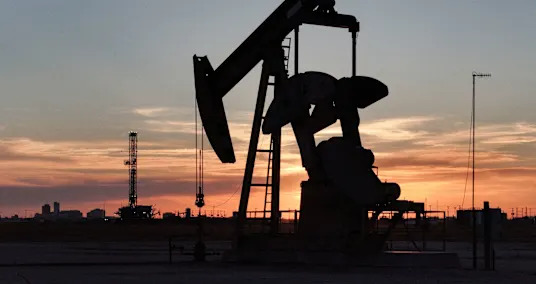
The prevailing sentiment at CERAWeek has been that financial markets have not yet come to terms with how long lasting the oil and gas market disruption from the war is likely to be; higher prices will very likely loom even if the US military quickly prevails. No matter what happens next, the war underscores the volatility inherent to the global fossil fuel trade at a time when alternative technologies are proliferating.
Sure, renewables are exposed to upfront, capex-related risk. And yes, China effectively controls the market for wind, solar, and battery hardware, and for the minerals they require. But once they’re installed, these technologies are largely insulated from geopolitical events, as Pakistan has proved in recent weeks by leaning on solar while neighboring Bangladesh suffers from skyrocketing gas prices. “The fact that the wind and sun are free and domestic and inexhaustible doesn’t get nearly as much play as it deserves,” David Crane, a former senior US energy official who is now CEO of the investment firm Generate Capital, told me this week. Put another way, the sun — unlike, say, a strait — can’t be shut down by one’s adversaries.
Fossil fuels, conversely, are permanently exposed to ongoing opex risk. Even the US, the world’s top producer, can’t completely insulate itself from price spikes. But the fact is that every country will need a mix of all technologies for the foreseeable future to maintain access to reliable, affordable energy.
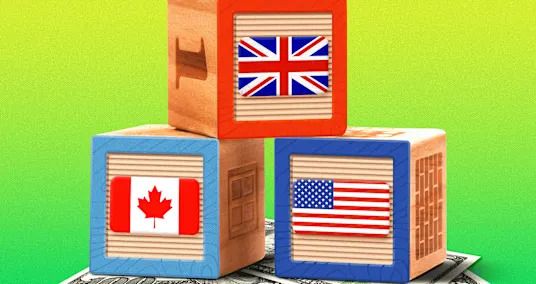
After the energy crisis of the 1970s, many countries leaned diversified international trade and coordination as the solution, hoping that increasing the number of sources of supply would diminish any one actor’s ability to throttle the market. That mostly worked for 50 years. The legacy of this war will be a shift by countries to lean trade as much as they can, Meghan O’Sullivan, a former National Security Council official and energy geopolitics expert at Harvard, told me: “The lesson many will take away from this is that being exposed to global shocks is something they need to avoid.”
Notable
The replacement for the liberal international order “won’t be negotiated in Geneva or adjudicated in The Hague,” writes Foreign Policy, “It will be determined by who controls the energy flows, mineral deposits, and technological systems on which all modern life now depends.”
latest_posts
- 1
 Artemis 2 captures historic 'Earthset' photo | Space photo of the day for April 7, 2026
 - 2Highlight Correlation of Microsoft Surface Book and Surface Genius Workstations for Determination
- 3Vote In favor of Your Number one Savvy Beds
- 4Anthony Joshua's driver charged over Nigeria crash that killed two
- 5A definitive Frozen yogurt Standoff: Which Flavor Rules?



- Investigation reveals sperm donor passed on cancer risk to dozens of children across Europe
- Vote In favor of Your Favored Sort Of Dress
- 3 moms, 3 countries, 1 very familiar problem: Why child care costs still don't add up for families
- Outside Lovers' Decision: Favored Climbing Rucksacks
- The most effective method to Pick the Best Wellbeing Highlights for Seniors in SUVs
- Sa'ar warns German delegation: 'A Palestinian state would be a Hamas terror state'
- Selena Quintanilla documentary 'Selena y Los Dinos: A Family's Legacy' is coming to Netflix
- France to build new nuclear aircraft carrier, Macron says
- Finding the Universe of Computer generated Reality: Individual Encounters